
6 min read

Well Control Valve Manufacturer: What to Look For Before You Buy

Well Control Valve Manufacturer: Buyer's Guide | M&M Oil Tools
16:21

This guide outlines the six criteria drilling engineers and procurement managers should use to evaluate a well control valve manufacturer: API Spec Q1 licensing, material traceability and MTR documentation, NACE MR0175 sour service qualification, USA manufacturing advantages, testing standards beyond the API minimum, and field history and service support. It explains why each criterion matters, what to ask vendors, and how M&M Oil Tools meets each one.

Not every manufacturer stamping a valve as "API compliant" actually runs the quality system, traceability, and material testing that a real well control application demands. This guide walks through what to look for: the certifications that actually matter, why material traceability is non-negotiable, how sour service capability separates the field, and what USA manufacturing gets you that offshore options don't.

If you're evaluating well control valve suppliers right now, start here.

What Should I Look For in a Well Control Valve Manufacturer?

A qualified well control valve manufacturer should carry the right API licenses, document the materials in every pressure-containing part, and be qualified for sour service if H₂S is anywhere in the program's future.

Specifically:

  • API Spec Q1 license: the quality management system that makes any API product stamp meaningful
  • Product licensing under the applicable API specification: API Spec 7-1 for drill stem elements, API Spec 16C for choke and kill, API Spec 6A for wellhead and tree equipment
  • Full material traceability (MTRs) on every pressure-containing component, tied to the valve's serial number
  • NACE MR0175 / ISO 15156 sour service qualification for any valve that may see H₂S
  • Testing that exceeds the API minimum: 100% hydrostatic testing, function testing under load, and serialized test records
  • USA manufacturing for supply chain transparency, shorter lead times on spares, and direct engineering access


Are All API-Stamped Well Control Valves the Same?

No. The API stamp is a floor, not a ceiling. Well control valve suppliers range from integrated manufacturers running full API Q1 systems to importers who re-stamp offshore castings and forward them through a distribution layer. Two valves with identical pressure ratings can come from entirely different supply chains, and the delta shows up on the rig in spares lead times, engineering access, and whether MTRs are available when an operator audits the program.

M&M has run an integrated manufacturing model out of Breaux Bridge, Louisiana since 1944. Design, machining from heat treated alloy bar stock, assembly, and hydrostatic testing happen under one roof, including our patented PWC Cartridge™ kelly and safety valve design.


1. What Does an API Spec Q1 License Actually Tell You?

API Spec Q1 is the audited quality management system that sits underneath every legitimate API product monogram. Without it, the product stamp is undifferentiated marketing.

A current Q1 license means the manufacturer has documented and third-party-audited systems covering design control, supplier qualification, material handling, inspection, nonconformance, and corrective action.

When you vet a well control valve supplier, ask for:

  • The current API Q1 license number and expiration date
  • The specific product specification the valve is licensed under (API 7-1 for drill stem elements, API 16C for choke and kill, API 6A for wellhead and tree equipment)
  • Confirmation that the design has been validated under that spec

A vendor that can't produce those within a day isn't running the quality system their literature implies.


2. What Material Traceability Should a Well Control Valve Manufacturer Provide?

Full MTR coverage on every pressure-containing component, tied to the valve's serial number, with a clean chain back to the mill heat number.

Certificates of conformance are not a substitute; they confirm the vendor says the material meets spec, not that it was tested to prove it.

A qualified manufacturer should:

  • Provide MTRs for every pressure-containing part, tied to the serial number of the assembled valve
  • Machine bodies from heat treated alloy bar stock rather than castings or weldments, avoiding porosity, weld HAZ, and unpredictable grain structure (the same construction approach M&M has used on pressure-containing components since the 1940s)
  • Maintain a traceability chain from mill heat number through final hydrostatic test

If MTRs aren't available on request, the valve isn't qualified for well control service regardless of what the spec sheet says.


Request a Vendor-Grade Spec | Sourcing for a drilling program?

Talk to An Engineer →


3. What Sour Service Qualification Should the Manufacturer Have?

NACE MR0175 / ISO 15156 compliance, documented and auditable, with material selection, hardness control, and heat treatment procedures tied to the specific H₂S partial pressure and temperature of the application. Partial compliance isn't a category.

When specifying for sour service, confirm:

  • Materials meet NACE MR0175 requirements for the H₂S partial pressure and temperature expected in the well
  • Hardness testing is performed on every heat treated lot, not sampled
  • The elastomer package, where applicable, is qualified for sour exposure
  • The manufacturer can produce NACE certification documentation on request, tied to the valve serial number

If the program could see H₂S at any point in its life, specifying NACE at purchase is cheaper than re-qualifying the equipment mid-campaign.


4. Why Does USA Manufacturing Matter for Well Control Valves?

USA-based manufacturing is a supply chain decision, not a marketing one. It affects traceability, spares lead time, and how quickly you can get an engineer on a call.

The practical differences:

  • Traceable supply chain from U.S. mill to machining to test, with no re-stamped castings or ambiguous country-of-origin documentation
  • Shorter lead time on critical spares, because a safety valve failure on a Gulf of Mexico rig can't wait on a two-week ocean shipment
  • Direct engineering access, because the people who designed the valve are on the same site that built it, not a distributor two time zones from the shop

M&M manufactures every well control valve in Breaux Bridge, Louisiana, including the PWC Cartridge™ kelly valve design, with design, machining, assembly, and test under one roof.


5. What Testing Should a Manufacturer Do Beyond the API Minimum?

Hydrostatic testing on 100% of valves, function testing under simulated load, bar stock construction on pressure-containing bodies, and serialized test records retained for the life of the valve.

API specs set a floor; manufacturers serious about the application exceed it on the items that actually drive field reliability:

  • 100% hydrostatic testing at rated working pressure and test pressure, with traceable calibrated gauges
  • Function testing under simulated load, not static pressure alone
  • Bar stock construction for pressure-containing bodies, avoiding the porosity and inclusion risk of castings
  • Serialized test records retained for the life of the valve, available for operator and regulator audit

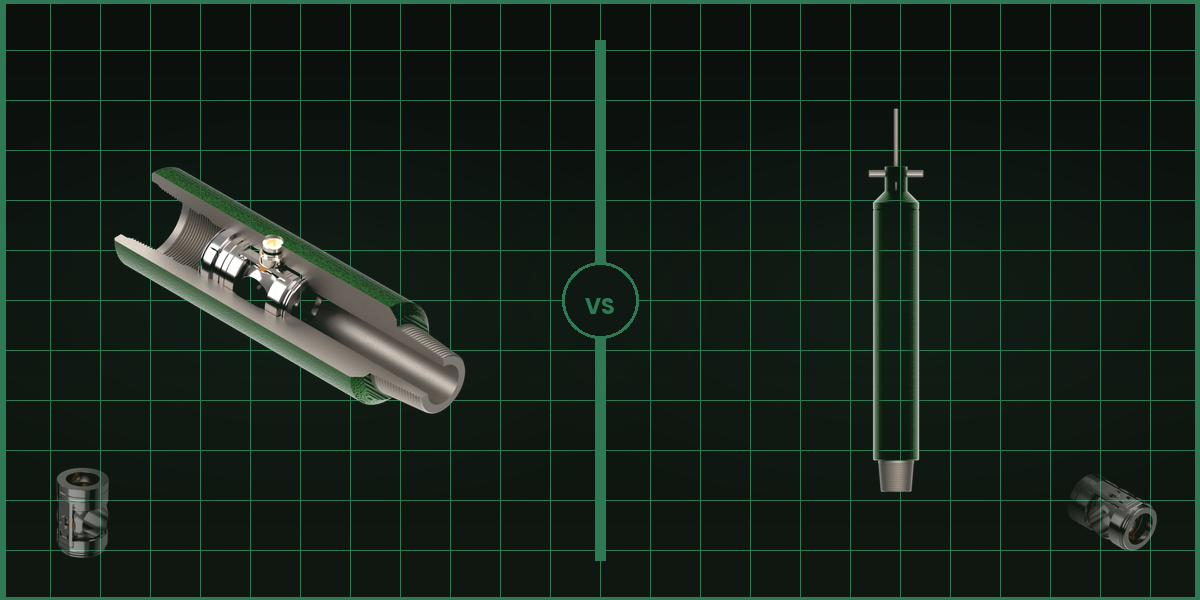
If you're weighing a TIW-style valve against a dedicated IBOP, our TIW Valve vs. IBOP guide breaks down the functional differences and when each is specified.


Evaluating well control valves for an upcoming program? Our engineering team will walk through your pressure rating, service environment, and connection requirements and send back a vendor-grade spec sheet, no boilerplate. Request a quote or call +1 (877) 240-9564.


6. How Do I Evaluate a Manufacturer's Field History and Service Capability?

By asking specific questions about design longevity, operator references, in-house repair capability, and spares inventory, and expecting specific answers. A manufacturer's field record and service model tell you what a spec sheet can't:

  • How long has this valve design been in the field, and what's the fleet size?
  • Which operators and drilling contractors are running it, in which basins and service conditions?
  • Is repair and re-certification handled in-house, or outsourced?
  • Are replacement parts held in inventory, or made to order after the failure?

A vendor that answers those in specifics is a manufacturer. A vendor that redirects to marketing language is a reseller. M&M's well control valves have been in continuous production and field service across the Gulf of Mexico, U.S. land basins, and international markets for decades, with repair and re-certification handled at the same Breaux Bridge facility that built the original valve.


How M&M Oil Tools Measures Up

M&M has been manufacturing well control equipment in the United States since 1944. Our well control valve line, including IBOP valves, kelly valves, and safety valves, is built in Breaux Bridge, Louisiana under an API-aligned quality system, from heat treated alloy bar stock, with full MTR traceability and sour service capability available across the range. Our IBOP valves are designed for the real-world duty cycle of the top drive and kelly, not a bench test.

If you're vetting suppliers for a drilling program, a tender response, or a rig build, we'd rather have the technical conversation than send a brochure.

Contact Us  ·  +1 (877) 240-9564


Frequently Asked Questions


What certifications should a well control valve manufacturer have?

At minimum, a current API Spec Q1 quality system license and product licensing under the applicable API specification: API Spec 7-1 for drilling equipment including IBOP, kelly, and upper kelly valves; API Spec 16C for choke and kill equipment; API Spec 6A for wellhead and surface tree components. NACE MR0175 / ISO 15156 qualification is required for any valve that may see H₂S service. Ask for license numbers and expiration dates, not logos.

Read More: Drilling Engineer's Guide to IBOP Valves

What is the difference between a TIW valve and a well control valve?

"TIW valve" is a legacy industry term derived from Texas Iron Works, historically referring to a full-opening safety valve installed in the drill string. In modern usage, "well control valve" is the broader category that includes IBOP valves, kelly cocks, upper and lower kelly valves, and drill string safety valves. A TIW-style valve is one type of well control valve; an IBOP is another, designed specifically to be stabbed into the top of the drill string during a kick.

What API standard applies to well control valves?

API Spec 7-1 covers rotary drill stem elements, including kelly valves, upper kelly cocks, lower kelly valves, and drill string safety (IBOP) valves. API Spec 16C covers choke and kill systems downstream of the BOP. API Spec 6A covers wellhead and tree equipment. Which spec applies depends on where in the pressure-control system the valve sits. A qualified manufacturer will tell you the exact product specification their valve is licensed under.

Does a well control valve need to be made in the USA?

Not by regulation, but U.S. manufacturing gives you supply chain traceability, shorter lead times on critical spares, and direct access to the engineers who designed the valve. For safety-critical equipment, those three factors usually justify the preference on their own.

How do I verify a manufacturer's API Q1 license?

API maintains a public composite list of licensed manufacturers. Ask the vendor for their license number and verify it directly on the API Composite List. If the number doesn't appear, the license is not active, regardless of what the brochure says.


Green M from the M&M Oil Tools logo with their graphic illustration of a green valveAbout Us

M&M Oil Tools has served the oil and gas industry since 1944, manufacturing IBOP valves, kelly and safety valves, casing scrapers, casing brushes, and surface test trees from our purpose-built facility in Breaux Bridge, Louisiana. Made in the USA. Every valve ships with mill certificates, test reports, and a Certificate of Conformance.
Contact Us · +1 (877) 240-9564 · mmoiltools.com

What Is an IBOP Valve? The Complete Drilling Engineer's Guide

What Is an IBOP Valve? The Complete Drilling Engineer's Guide

In this guide: What IBOP valves are and how they work, the functional difference between upper and lower IBOPs, critical specs for HPHT and...

Read More
TIW Valve vs. IBOP Valve - What's the Difference?

TIW Valve vs. IBOP Valve - What's the Difference?

In this guide: What TIW valves and IBOP valves are, how each one works, the key mechanical and operational differences, when to use each, and...

Read More
Casing Scraper vs. Casing Brush - Which Do You Need for Wellbore Cleanup?

Casing Scraper vs. Casing Brush - Which Do You Need for Wellbore Cleanup?

In this guide: What casing scrapers and casing brushes do, the key mechanical differences between them, when to use each, when to run both, and...

Read More