

What Is an IBOP Valve? The Complete Drilling Engineer's Guide
In this guide: What IBOP valves are and how they work, the functional difference between upper and lower IBOPs, critical specs for HPHT and...
High-performance casing tools, well-control equipment, and downhole tools engineered for land, offshore, and HPHT operations.
Table of Contents
|
In this guide: What TIW valves and IBOP valves are, how each one works, the key mechanical and operational differences, when to use each, and how they fit together as complementary barriers in a complete well control program. |
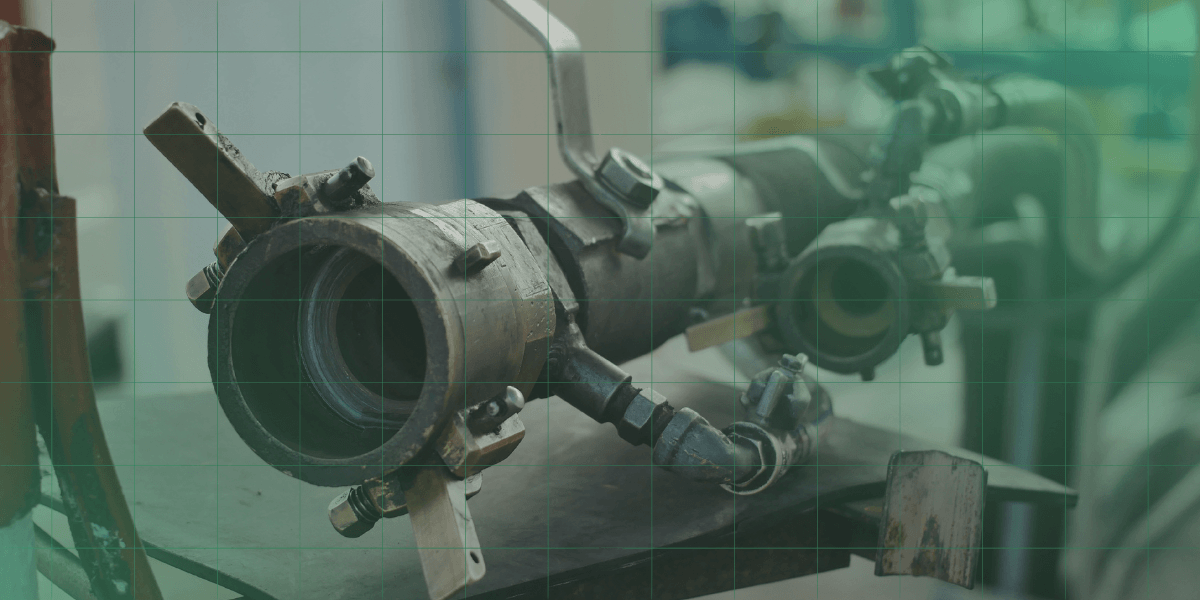
A TIW valve is a manual ball valve stabbed into the drill string at surface to provide immediate, operator-actuated well shutoff during kicks or well control emergencies. It does not close automatically; a crew member must physically close it.
Named after Texas Iron Works, the company that popularized the design, it is also commonly referred to as a Full Opening Safety Valve (FOSV) or Drill String Safety Valve (DSSV).
TIW valves are engineered to:
Per BSEE 30 CFR Part 250 and standard industry practice, a TIW valve is required to be on the rig floor, open and ready to stab, at all times during drilling operations.
An IBOP valve is an automatic, poppet-style valve threaded into the drill string that closes without human input when upward flow pressure exceeds the spring threshold, providing continuous, hands-free well control protection during active drilling and circulation.
IBOP stands for Internal Blowout Preventer. Unlike the TIW valve, no crew action is required for the IBOP to function. It is installed directly in the drill string and automatically closes when formation pressure reverses flow upward through the string.
M&M's IBOP valves are available in one-piece and two-piece construction, built as H₂S trim as standard, and designed with a conical nose and metal-to-metal seat to minimize erosion during long-term, high-rate circulation. Every valve ships with mill certificates, test reports, and a Certificate of Conformance.
For a complete technical breakdown of IBOP valve design, specifications, and regulatory requirements, see our IBOP valve guide.
| TIW Valve | IBOP Valve | |
|---|---|---|
|
Also Known As |
FOSV, DSSV, Full Opening Safety Valve |
Inside Blowout Preventer, Gray Valve |
|
Valve Mechanism |
Manual ball valve |
Automatic poppet-style check valve |
|
Actuation |
Manual — requires crew to close |
Automatic — closes without crew input |
|
Position |
Stabbed in at surface / rig floor |
Threaded into drill string at any point |
|
Primary Use |
Emergency shutoff during kicks or tripping |
Continuous protection during drilling & circulation |
|
Pressure Direction |
Bidirectional |
Unidirectional (closes against upward flow) |
|
Flow When Open |
Full bore — unrestricted circulation |
Opens automatically for normal circulation |
|
H₂S Service |
Available |
Standard on all M&M units |
|
Regulatory Status |
Required on rig floor, open and ready, per BSEE |
Required in drill string per operator well control programs |
|
Typical Pressure Rating |
10,000 or 15,000 psi |
HPHT rated — matches well program MASP |
|
Construction |
One-piece body |
One-piece or two-piece |
|
API Standard |
API 7-1 |
API 7-1, API Q1 |
Because the TIW valve must be stabbed open - the ball must be in the open position to stab over the drill pipe - there is a window of exposure between the time the well begins flowing and the time the valve is closed. Crew speed and preparedness directly affect how quickly that window closes.
The operating sequence:
This is exactly why TIW valves and IBOP valves are not interchangeable. They address different phases of the same risk.
When formation pressure exceeds pump pressure and flow reverses direction (the signature of a kick) the spring closes the poppet automatically, sealing the bore. No crew input. No delay. No dependence on response time.
During normal drilling and circulation, pump pressure holds the spring-loaded poppet open, allowing fluid to flow downward through the string. The closure is entirely pressure-driven — the mechanism responds to the event itself, not to a crew member recognizing it.
Once the kick is controlled and pressure is equalized, the poppet opens automatically and circulation resumes. In top drive systems, upper and lower IBOPs are typically run in tandem — the lower IBOP closes automatically during the well control event, and the upper IBOP gives the crew a manual backup and a way to isolate the string above the top drive.
View M&M's IBOP valve lineup for specifications, configurations, and thread options.
This is the question that matters most operationally and the answer is not either/or.
The correct answer in most operations: both, deployed as a layered barrier system. The IBOP provides automatic protection while drilling; the TIW valve provides manual backup at surface during tripping. They are designed to complement each other, not compete.
Use a TIW valve when:
Use an IBOP valve when:
The term "Gray valve" is sometimes used interchangeably with IBOP valve, but the distinction matters for specification purposes.
A Gray valve is a specific legacy trade name for a drop-in, poppet-style check valve designed to be stabbed into open drill pipe, similar in form factor to a TIW valve but functioning as a one-way check, not a bidirectional ball valve. In current industry usage, "IBOP" has largely replaced "Gray valve" as the preferred term for in-string poppet-style check valves.
The practical distinction for procurement: if a well control program specifies a "Gray valve," verify whether the application requires a stabbing-style poppet check or a full in-string IBOP. They are not always the same specification, and the application context determines which is appropriate.
Both valve types reference API 7-1 (Specification for Rotary Drill Stem Elements) as the governing standard for drill stem equipment. However, compliance requirements differ in practice:
For offshore operations, both valve types must satisfy BSEE 30 CFR Part 250 requirements. HPHT applications reference API RP 96 and NORSOK D-010 for well barrier specifications that govern both valve types in the context of a complete barrier program.
The answer depends on where in your well control architecture the gap exists, and in most cases, the right answer involves both:
M&M Oil Tools manufactures well-control valves across the full spectrum: kelly valves, safety valves, top drive IBOPs, and the patented PWC Cartridge Ball Valve used throughout the product line.
Contact our team or call (877) 240-9564 to discuss your specific well program, top drive OEM compatibility, or H₂S service requirements.
What does TIW stand for in TIW valve?
TIW stands for Texas Iron Works, the company that originally designed and popularized this style of full-opening drill string safety valve. The name stuck as a generic industry term even though multiple manufacturers now produce equivalent valves. TIW valves are also referred to as Full Opening Safety Valves (FOSV) or Drill String Safety Valves (DSSV).
What is the difference between a TIW valve and an IBOP valve?
A TIW valve is a manual ball valve stabbed into the drill string at surface to shut in the well — it requires crew actuation to close. An IBOP valve is an automatic poppet-style valve permanently threaded into the drill string that closes without crew input when formation pressure reverses flow. TIW valves provide surface-level manual shutoff; IBOP valves provide automatic in-string protection during active drilling. Most well control programs require both.
Can a TIW valve replace an IBOP valve?
No. A TIW valve and an IBOP valve perform different functions and occupy different positions in the well control barrier program. A TIW valve requires manual actuation and is used primarily as a surface safety valve during tripping. An IBOP valve operates automatically in the drill string during drilling and circulation. Substituting one for the other creates a barrier gap — either in the in-string automatic protection layer (if no IBOP is run) or in the surface manual shutoff layer (if no TIW valve is staged).
What is a full-opening safety valve (FOSV)?
A Full Opening Safety Valve (FOSV) is another name for a TIW valve — a manual, full-bore ball valve designed to be stabbed into drill pipe at surface to shut in the well during a well control event. "Full opening" refers to the unrestricted bore when the valve is in the open position, which allows pumping operations to resume without flow restriction after the valve is installed.
Is an IBOP valve the same as a Gray valve?
The terms are sometimes used interchangeably, but "Gray valve" is an older trade name for a specific drop-in poppet-style check valve design. In modern industry usage, "IBOP" is the standard term for automatic in-string poppet check valves. If a well control program specifies a Gray valve, verify the exact design specification required — the application context determines whether a traditional Gray valve design or a current IBOP configuration is appropriate.
When is a TIW valve required by regulation?
Under BSEE 30 CFR Part 250, a drill string safety valve (TIW valve) must be on the rig floor, open and ready to install, at all times during drilling operations on the Outer Continental Shelf. Most major offshore operators and drilling contractors extend this requirement globally as standard well control policy, regardless of specific regional regulation.
API 7-1 — Specification for Rotary Drill Stem Elements, American Petroleum Institute
API RP 96 — Deepwater Well Design and Construction, American Petroleum Institute
NORSOK D-010 — Well Integrity in Drilling and Well Operations, Standards Norway
BSEE 30 CFR Part 250 — Oil and Gas and Sulphur Operations in the Outer Continental Shelf, U.S. Bureau of Safety and Environmental Enforcement
M&M Oil Tools IBOP Valve & Well-Control Valve Product Specification Sheets
M&M Oil Tools has served the oil and gas industry since 1944, manufacturing IBOP valves, kelly and safety valves, casing scrapers, casing brushes, and surface test trees from our purpose-built facility in Breaux Bridge, Louisiana. Made in the USA. Every valve ships with mill certificates, test reports, and a Certificate of Conformance.
Contact Us · +1 (877) 240-9564 · mmoiltools.com
In this guide: What IBOP valves are and how they work, the functional difference between upper and lower IBOPs, critical specs for HPHT and...