

What Is an IBOP Valve? The Complete Drilling Engineer's Guide
An IBOP valve (Internal Blowout Preventer) is an automatic drill string safety valve that closes without crew input to stop uncontrolled flow...
High-performance casing tools, well-control equipment, and downhole tools engineered for land, offshore, and HPHT operations.
Table of Contents
|
Inside BOP, or IBOP, is the ball valve that closes off the inside of the drill pipe when a well kicks. Pick the wrong working pressure, bore size, or material trim, and you've built a weak link into your well control system. Pick the right one, and you've got a piece of equipment that quietly does its job for years between rebuilds. This guide covers what an inside BOP does, why two valves are usually stacked together, and how to spec standard versus H2S-trim variants. |
This guide walks through what an inside BOP actually does, why "inside BOP" and "IBOP" are the same equipment, how standard and H2S-trim variants differ, and how to spec the right valve. Whether this is your first time looking at a drilling valve catalog or your hundredth, you'll find what you need below.
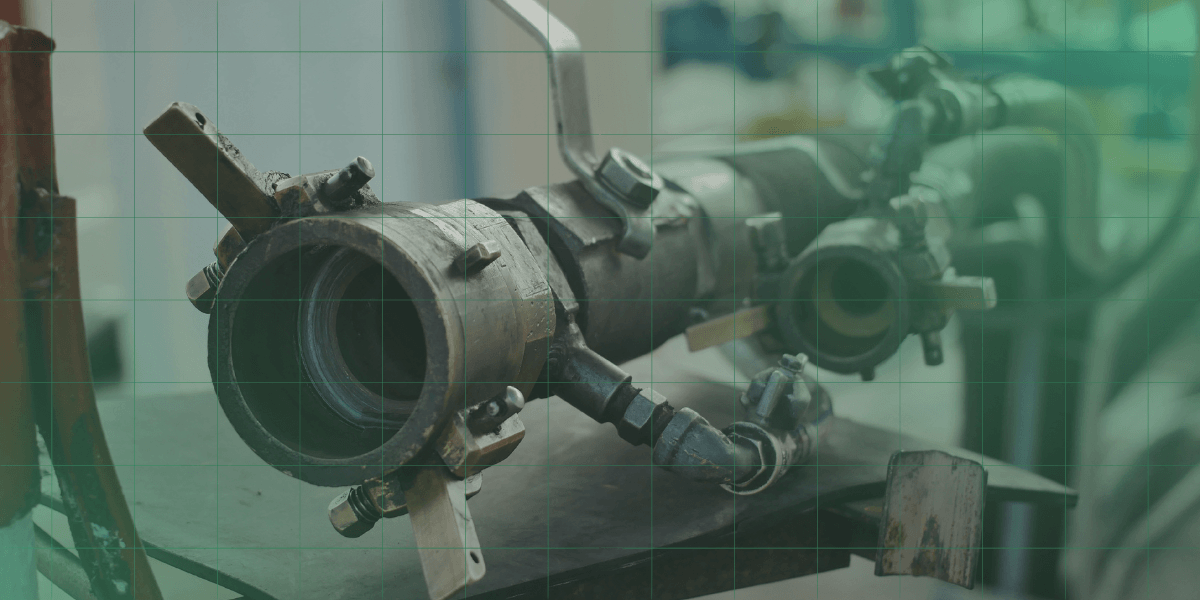
An inside BOP is a full-bore valve installed inline with the drill string - usually directly below the top drive saver sub - that closes to stop vertical flow up through the pipe during a well control event. The valve sits between the top drive and the drill pipe. When a kick travels up the bore and threatens to reach surface equipment, the driller closes the inside BOP and isolates the drill string from above.
Most modern rigs run two inside BOP valves stacked together: an upper unit operated manually with a hand wheel or wrench, and a lower unit operated hydraulically from the driller's console. Both are typically full-opening ball valves, sized to match the drill string ID so drilling fluid flows through unrestricted when the valve is open.
According to the SLB Energy Glossary, the inside blowout preventer is described as a check valve or ball valve placed in the drill string to prevent flow upward through the pipe. The term covers both legacy drop-in check valves used with kellys (the older square or hexagonal drive pipe that's been mostly replaced by top drives) and the modern ball valves built into top drive saver subs.
Inside BOP and IBOP (Inside Blow-Out Preventer) describe the same equipment. The acronym just shortens the spec sheet. Both terms appear in API standards, IADC well control valve manuals, and manufacturer catalogs, often within the same document.
The naming gets confusing because the surface BOP stack components - annular preventer, pipe rams, blind rams, shear rams - also carry the "BOP" label. The "inside" qualifier tells you this valve sits inside the drill string flow path, not on the outside of the pipe like the rams in the BOP stack below the rig floor.
A few related terms worth knowing:
If you're running casing before or after well control operations, it's also worth knowing the difference between a casing scraper vs. casing brush - two tools that often appear on the same BHA but serve different functions in preparing the wellbore.
The bop valve uses a spherical ball with a through-hole that matches the bore size. When the ball rotates 90 degrees, the through-hole aligns with the drill string and fluid flows unrestricted. When the ball rotates back, the solid face seals against two seats - one above, one below - and shuts off vertical flow in both directions.
Bidirectional sealing matters here. During a kick, the valve has to hold back upward flow from a pressurized formation. During a stripping operation (moving pipe through closed BOPs while well pressure is present) or a pressure test, the valve has to hold back downward flow too. The seats are typically machined from elastomer-backed metal or solid elastomer (HNBR, FKM, or AFLAS, depending on service), supported by the valve body.
Two operation methods cover almost all field use:
Both types use pressure-energized seal designs. The higher the bore pressure, the harder the seats push against the ball, keeping the valve gas-tight at full working pressure (typically 5,000 / 10,000 / 15,000 psi depending on the model).
The main difference between a standard inside BOP and an H2S-trim inside BOP is the materials. Both valves look the same externally and operate the same way. What changes is the metallurgy and elastomer (sealing rubber) selection inside, chosen to resist sulfide stress cracking when hydrogen sulfide (H2S) is present in the well.
H2S-trim valves meet NACE MR0175 / ISO 15156 requirements for materials used in oilfield equipment exposed to sour service. The standard limits hardness on low-alloy steel components (typically 22 HRC maximum on the Rockwell C hardness scale), restricts certain weld procedures, and specifies elastomers that won't degrade in H2S environments.
| Component | Standard Inside BOP | H2S-Trim Inside BOP |
|---|---|---|
|
Body and end connections are made from these materials
|
AISI 4140 or 4145H low-alloy steel with standard heat treatment
|
AISI 4140 / 4145H heat-treated to a maximum 22 HRC per NACE MR0175
|
|
Ball and stem use this metallurgy
|
Hardened alloy steel, often surface-treated for wear resistance
|
Corrosion-resistant alloy (CRA) overlay or solid CRA, hardness controlled per NACE
|
|
Elastomer seats and seals are selected from
|
NBR (nitrile rubber) for standard sweet service
|
HNBR, FKM, or AFLAS rated for H2S exposure at temperature
|
|
Service rating allows operation in these environments
|
Sweet wells with no measurable H2S
|
Sour wells within NACE MR0175 partial pressure limits
|
|
Price typically falls in this range relative to standard
|
Baseline cost for the product class
|
Roughly 25 to 60 percent higher depending on size and pressure class
|
The pressure rating, bore size, and connection threads stay the same between standard and H2S-trim variants of the same model. Swapping trim doesn't change how the valve fits on the rig, just where it can safely be used.
You need an H2S-trim inside BOP when the partial pressure of H2S in the produced or drilling fluid exceeds 0.05 psi at the valve's location. That's the threshold defined in NACE MR0175, the standard maintained by AMPP (the Association for Materials Protection and Performance), for sour service. Below that partial pressure, standard materials are generally acceptable. Above it, sulfide stress cracking risk rises and NACE-compliant materials become mandatory.
Practical situations that call for H2S trim:
H2S exposure causes two failure modes in steel components. The first is sulfide stress cracking (SSC), a brittle fracture in hard, stressed parts. The second is hydrogen-induced cracking (HIC), internal blistering and stepwise cracking in steel with high inclusion content. NACE MR0175, published jointly with ISO 15156, addresses both by controlling chemistry, hardness, and processing.
Running a standard inside BOP in a sour well isn't a minor compliance issue. It's a safety failure waiting to happen. A cracked valve body or a brittle stem during a kick means losing the only barrier between formation pressure and the rig floor. Specify H2S trim whenever there's any chance of sour exposure during the well's life.
Five specifications drive the selection:
A buyer's checklist:
✔️ Confirm pressure rating matches the surface BOP stack and is at least 1.0x the maximum anticipated surface pressure (MASP - the highest pressure the operator expects to see at surface during the well).
✔️ Verify connection compatibility with existing saver sub and top drive interface.
✔️ Specify H2S trim if any sour exposure is possible during the well's life.
✔️ Request material test reports (MTRs) for all wetted parts on NACE-spec orders.
✔️ Check the manufacturer's pressure test certificate. New valves should be tested to 1.5x working pressure or per API 7-1 requirements.
When sourcing equipment, working with an experienced well control valve manufacturer ensures you get the correct pressure rating, bore size, and trim combination -along with the mill certificates and test reports your well program requires.
Most manufacturers offer four configurations that cover the majority of drilling applications. The right choice depends on bore size, working pressure, and whether you're drilling sweet or sour. Specific models vary, so check the manufacturer's data sheet against your well program before ordering.
These valves trade flow capacity for a smaller outside diameter, letting them pass through restricted areas in the top drive or sub assembly.
If you're not sure what spec you need, this is usually the starting point. Most rigs running 5-inch drill pipe will use a configuration in this range.
The larger ID reduces friction losses through the valve but adds cost and weight. Specify heavy bore when flow requirements drive the decision, not just because bigger sounds better.
Sour trim is available in most bore and pressure combinations. It's a metallurgy change, not a separate product line, so lead times are usually comparable to standard variants when manufacturers stock the required materials.
Higher working pressure ratings (20,000 psi) exist for HPHT (high pressure, high temperature) applications, though these are specialty items typically built to order. Industry papers cataloged on OnePetro document a steady trend toward higher-pressure IBOP designs as deepwater and HPHT drilling programs expand.
Questions about our inside IBOPs or need help spec'ing one for an upcoming well? Get in touch!
Contact Us · +1 (877) 240-9564
What's the difference between an inside BOP and a standard BOP?
A standard BOP, the kind stacked at the wellhead, controls flow on the outside of the drill pipe by sealing the annulus (the space between the drill pipe and the wellbore wall) or shearing the pipe. An inside BOP controls flow inside the drill pipe by closing off the bore. Both are needed for full well control. The surface BOP stack handles annular flow; the inside BOP handles drill string flow. During a kick, the driller closes both to isolate the well from the rig floor.
Are all IBOP valves the same as inside BOP valves?
Yes. IBOP stands for Inside Blow-Out Preventer, and the two terms describe the same equipment. You'll see "IBOP" used in spec sheets and drawings as a shorthand, while "inside BOP" appears more often in textbooks and well control manuals. Both refer to the ball valves installed in the top drive or kelly assembly that shut off vertical flow up through the drill string.
When do I need an H2S-trim inside BOP?
You need an H2S-trim inside BOP whenever the well's expected H2S partial pressure exceeds 0.05 psi at the valve's location, per NACE MR0175. That generally means any drilling in known sour fields, workovers on sour-producing wells, or any operation where the well program specifies sour service. Standard-trim valves can crack from sulfide stress cracking in sour environments, so trim selection is a safety requirement, not an upgrade option.
What pressure ratings do inside BOP valves come in?
Inside BOP valves are commonly available in 5,000 psi, 10,000 psi, and 15,000 psi working pressure classes. Specialty 20,000 psi valves exist for HPHT (high pressure, high temperature) applications and are usually built to order. The selected rating should match the surface BOP stack rating and exceed the maximum anticipated surface pressure for the well by an appropriate safety margin per the operator's well control standards.
How often should an inside BOP be inspected?
Most operators follow API 7-1 and the manufacturer's recommendations - typically a full teardown inspection annually or after every drilling campaign, whichever comes first. Field pressure tests are performed at the start of each well and at trip intervals defined in the drilling program. Visual inspection happens before every connection. Any valve that fails a pressure test or shows seat damage gets pulled and rebuilt before going back in service.
M&M Oil Tools has served the oil and gas industry since 1944, manufacturing IBOP valves, kelly and safety valves, casing scrapers, casing brushes, and surface test trees from our purpose-built facility in Breaux Bridge, Louisiana. Made in the USA. Every valve ships with mill certificates, test reports, and a Certificate of Conformance.
Contact Us · +1 (877) 240-9564 · mmoiltools.com
An IBOP valve (Internal Blowout Preventer) is an automatic drill string safety valve that closes without crew input to stop uncontrolled flow...
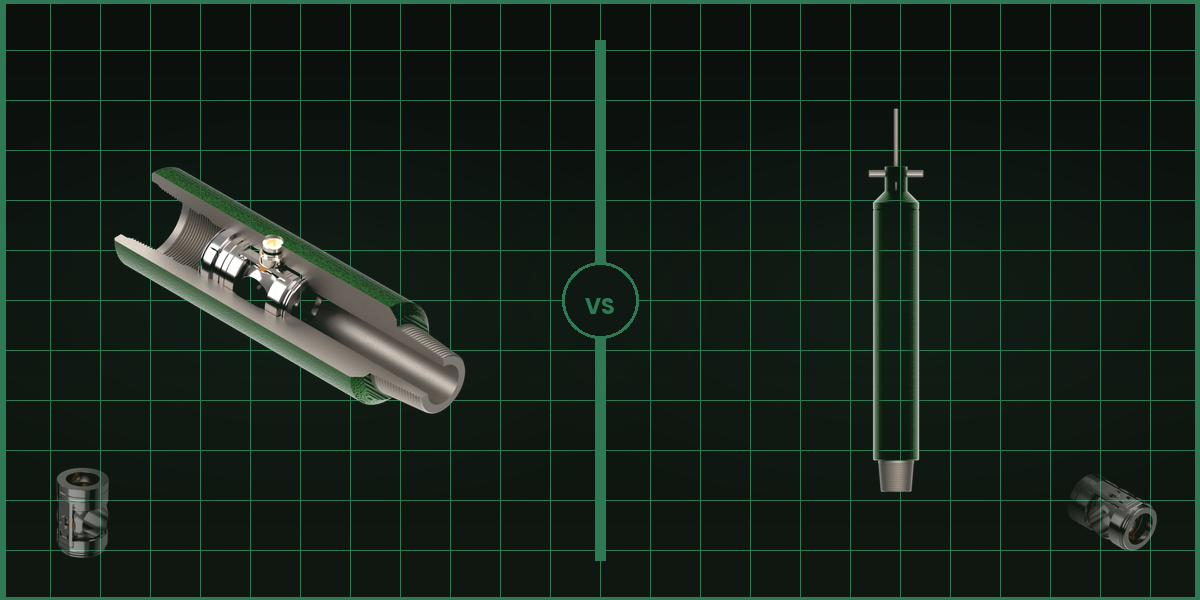
A TIW valve is a manual ball valve stabbed into the drill string at surface for emergency shutoff. An IBOP valve is an automatic poppet-style...
A qualified well control valve manufacturer carries an active API Spec Q1 license, provides full material traceability on every...